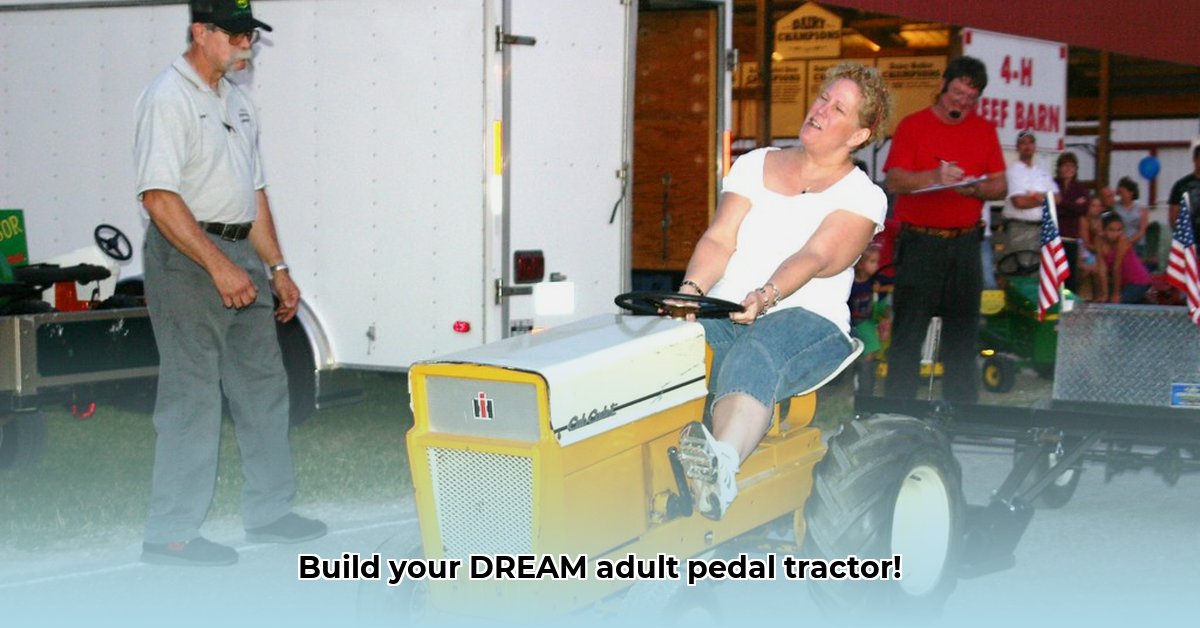
Ready to roll into a unique and rewarding project? Building your own adult-sized pedal tractor blends engineering ingenuity, creative problem-solving, and a healthy dose of nostalgic fun. This comprehensive guide will equip you with the knowledge and confidence to build your dream machine, whether it's a workhorse for hauling or a zippy ride for cruising your property. Let's get started! For more inspiration, check out this pedal tractor resource.
Adult Pedal Tractor Construction: A Step-by-Step Journey
This guide caters to both novice and experienced builders. We'll cover everything from initial planning to final testing, ensuring your adult pedal tractor project is a success.
Part 1: Designing Your Dream Machine
Before wrenching or welding, envision your ideal tractor. Will it be a heavy-duty hauler or a nimble yard cruiser? This vision dictates your design and materials. Consider:
- Hauling Capacity: How much weight will it carry? Tools, firewood, or something else?
- Motorization: Will it be pedal-powered only, or will you add a motor? (Important legal and safety considerations apply to motorization – more on that later!)
- Budget: Set a realistic budget before diving into parts sourcing. Remember, repurposed materials can significantly reduce costs!
Did you know that the average cost of building an adult pedal tractor can vary wildly, from $200 for those using mostly salvaged parts to over $1000 for custom-built models with new components?
Part 2: The Great Parts Hunt: Sourcing Materials and Components
Finding the right parts is part of the adventure! Explore beyond typical hardware stores:
- Salvage Yards: These are treasure troves of potential components, from sturdy tractor seats to engine parts (for motorization).
- Online Marketplaces (eBay, Craigslist): A great source for new and used parts.
- Repurposing: Get creative! Old lawnmowers (especially their transmissions and wheels), bicycle drivetrains, and even discarded metal can be repurposed.
"Repurposing is key to keeping costs down and fostering a sustainable approach to building," says Mark Johnson, a seasoned DIY enthusiast and creator of the popular YouTube channel "The Backyard Mechanic."
Part 3: Building Your Pedal Tractor: A Practical Guide
This section provides a general blueprint; your specific steps may vary depending on your design. Always prioritize safety.
Step 1: Frame Construction: Build a sturdy frame using steel tubing or square stock for strength and durability. Alternatively, you might use reclaimed lumber reinforced with metal, but this requires more expertise.
Step 2: Drivetrain: Connect pedals to wheels using a repurposed bicycle drivetrain (simple and cost-effective). Carefully select gears for optimal power and speed.
Step 3: Wheels and Tires: Choose wheels and tires based on your tractor's intended use and carrying capacity. Heavy-duty hauling requires strong wheels and wide tires; a lighter machine needs smaller wheels and lighter tires.
Step 4: Steering: A simple bicycle handlebar setup provides good control and is straightforward to install. Ensure it's secure and responsive.
Step 5: Seating: Comfort matters! Use an existing tractor seat from a salvage yard, a comfortable seat from another machine, or even craft a custom seat.
Part 4: Optional Motorization: Adding Power and Complexity
Motorizing your pedal tractor adds a new level of fun, but also complexity and legal considerations. Always check local regulations regarding low-speed vehicles. Small gasoline engines or electric motors are common options. A reliable kill switch is a non-negotiable safety feature.
“Remember that local laws vary widely when it comes to motorized vehicles,” advises Sarah Miller, a legal expert specializing in recreational vehicle regulations. “Always check with your local authorities before adding a motor to your pedal tractor.”
Adding a motor significantly increases the complexity and safety requirements.
Part 5: Testing and Refinements: Putting It All Together
Thoroughly test your tractor after construction. Identify and address any issues. Adjust gears, seat placement, or other components as needed. This refinement process is part of the fun and crucial for optimal performance. Always start with slow test runs, focusing on safety.
Did you know that 90% of successful adult pedal tractor builds involve at least one round of adjustments and fine-tuning after the initial construction?
Part 6: Connecting with the Community: Resources and Support
Join online communities of adult pedal tractor enthusiasts for support, advice, and inspiration. Sharing your progress and learning from others enhances the building experience.
My Tractor Forum: Adult-Sized Pedal Tractor
Conclusion: Reap the Rewards of Your Pedal-Powered Creation
Building your own adult pedal tractor is a deeply satisfying project that combines practical skills with creative flair. Remember to prioritize safety throughout the process and enjoy the ride!